
Blend styles, match undertones, vary scale, and repeat colors for cohesion.
I’ve designed bedrooms in tiny studios and busy family homes, and I know the exact steps that make a mix look custom, not chaotic. In this guide, I break down how to mix and match bedroom furniture with clear rules, easy wins, and fixes you can use today.
The design principles that make mixing work
If you want to learn how to mix and match bedroom furniture, start with the why. Spaces feel calm when they balance variety with order. Aim for harmony first, then add contrast in small, smart ways.
Key ideas that never fail:
- Balance: Pair a heavy piece with a lighter one. Mirror visual weight across the room.
- Repetition: Repeat at least two elements across three items. Woods, colors, metals, or shapes.
- Contrast: Mix textures or finishes. Matte with gloss. Soft with hard. Dark with light.
- Rhythm: Create gentle echoes. A round lamp, a round mirror, a dotted pattern.
- Negative space: Leave room to breathe. Space is part of the design.
- The 60-30-10 rule: 60 percent main color, 30 percent secondary, 10 percent accent.
Design research shows our eyes love rhythm and repetition. This is why a room feels “done” when two or three details repeat.

Source: marissacalhome.com
Choose your style, story, and color palette
A style story guides every choice. This is the heart of how to mix and match bedroom furniture without stress. Pick one main vibe, then add a supporting style in smaller doses.
Try these easy mixes:
- Modern base with vintage accents. Clean bed, antique nightstand, woven bench.
- Farmhouse base with mid-century lines. Wood bed, tapered-leg dresser, linen shades.
- Boho base with tailored pieces. Rattan headboard, crisp white dresser, brass lamps.
Build a tight color palette:
- Start with a neutral base like white, gray, beige, or greige.
- Add one wood tone and one metal finish.
- Choose one accent color for art or pillows.
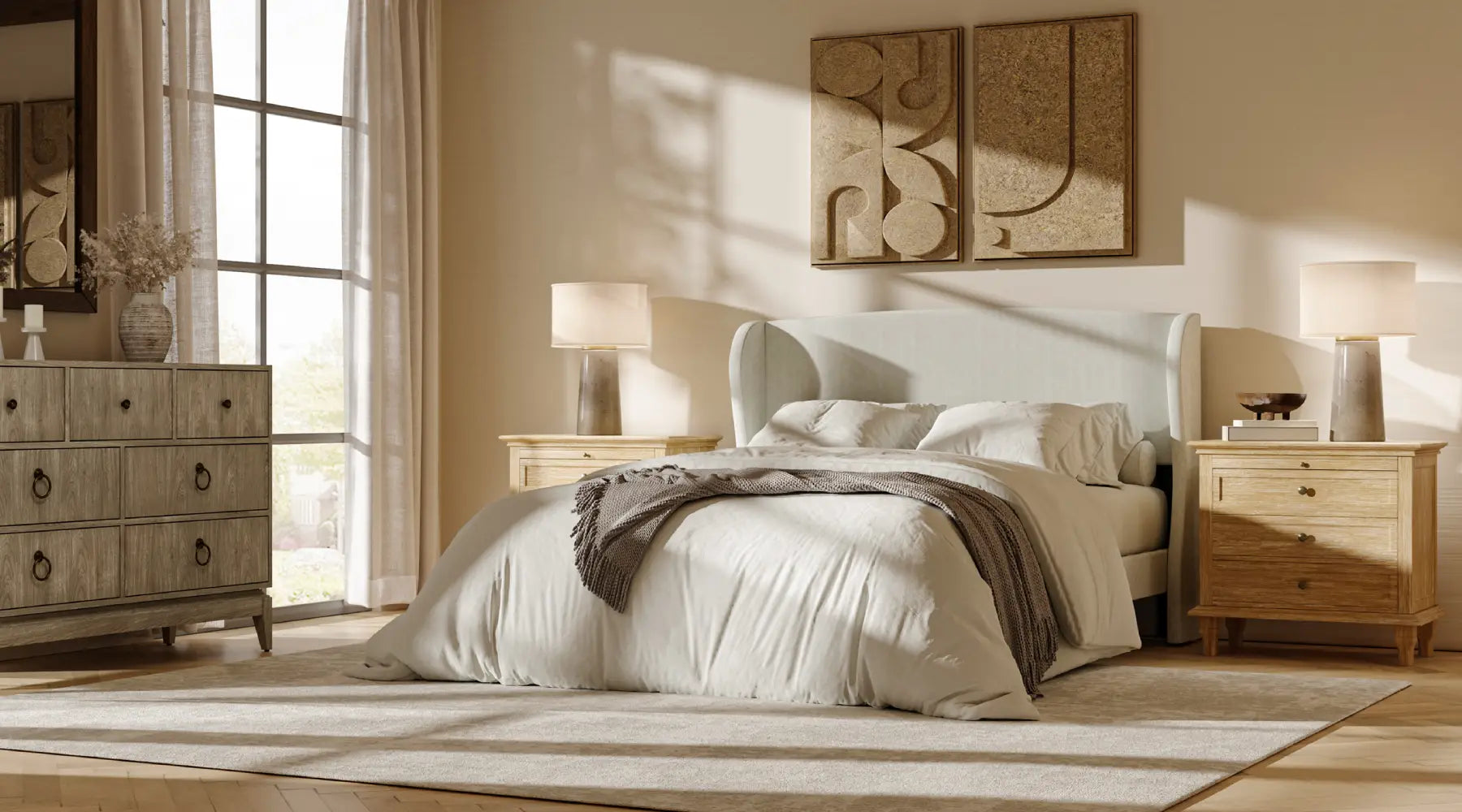
Tip from the field: I keep a small kit of paint swatches, wood chips, and fabric scraps. Hold them together in daylight and at night. Keep undertones aligned. Warm with warmth. Cool with cool.
Source: hulalahome.com
Wood tones and metal finishes that play well
A big part of how to mix and match bedroom furniture is mastering undertones. Woods have warm, cool, or neutral undertones. So do metals.
Use these rules of thumb:
- Mix two wood tones max. Three if the room is large and the palette is tight.
- Keep the undertones the same. Warm oak with walnut. Cool ash with black stain.
- Change grain scale. Pair a fine-grain piece with a chunkier one for contrast.
- Pick one dominant metal and one accent. For example, black iron plus a touch of brass.
- Vary metal sheen. Aged brass with matte black looks balanced.
- Bridge metals with hardware. Match knobs on the dresser to lamp bases or frames.
Pro move: If a wood reads too orange, cool it with gray textiles. If a metal feels loud, repeat it in one small place to make it look planned.

Source: marissacalhome.com
Scale, proportion, and layout that feel right
Even the best style mix will fail if the sizes fight. This is where many rooms go wrong, and where how to mix and match bedroom furniture becomes a simple math game.
Use these friendly numbers:
- Nightstand height: within 2 inches of the mattress top.
- Nightstand width: about one-third the bed width per side looks balanced.
- Lamp height: total height from floor to top of shade is around 58 to 64 inches.
- Walkways: 30 inches clear is safe. 36 inches feels great.
- Rug size: Queen bed works best with 8×10. King bed is 9×12.
- Bench length: about two-thirds of the bed width.
- Art above bed: hang 6 to 10 inches above the headboard.
- Mirror above dresser: hang 4 to 6 inches above.
These guidelines come from common interior standards and ergonomic studies. They help rooms feel calm and easy to use.

Source: jjonesdesignco.com
Start with a hero bed, then cast supporting pieces
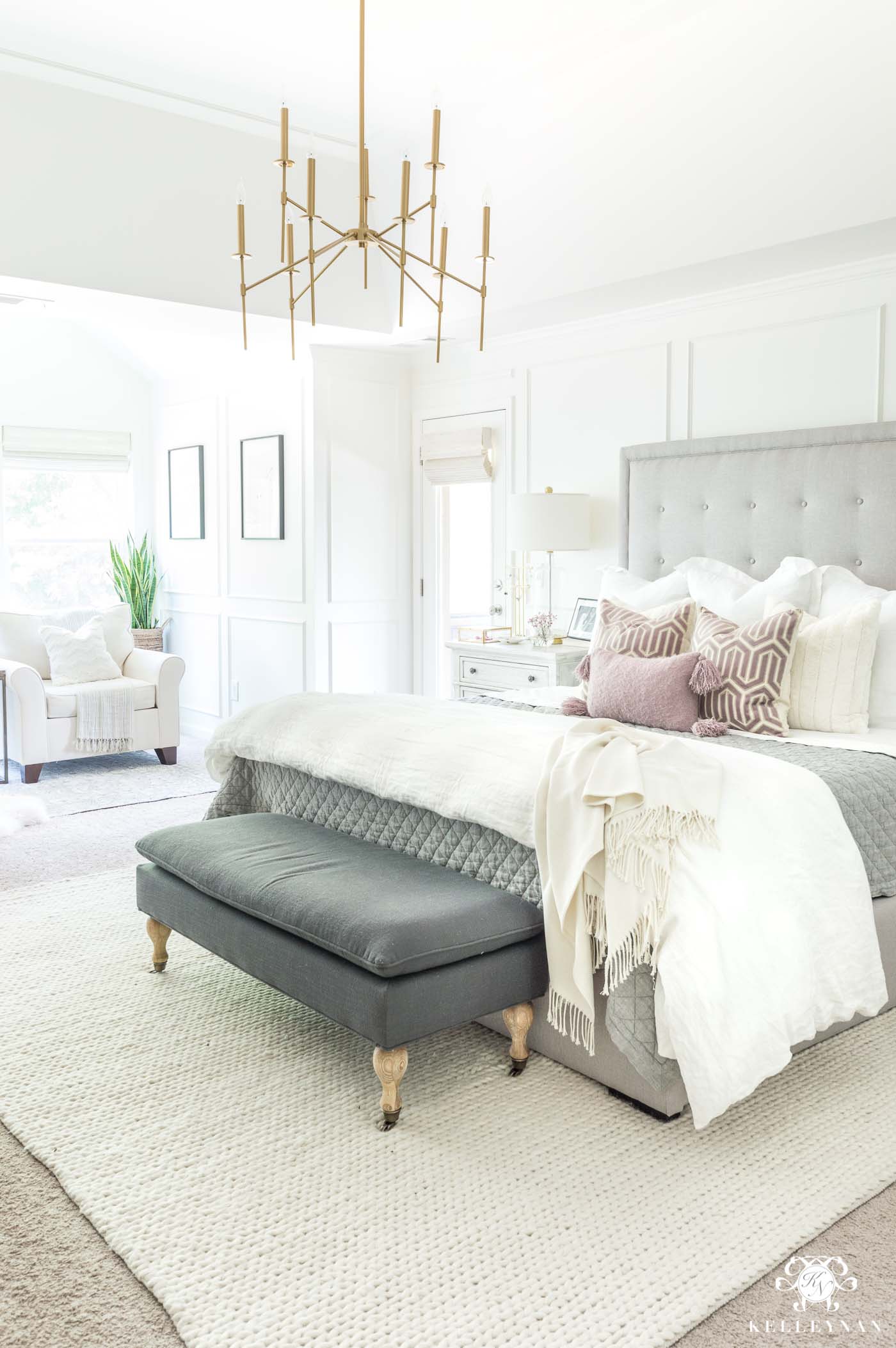
The bed sets the tone. It’s the hero. Every other piece supports it. When clients ask how to mix and match bedroom furniture, I tell them to pick the bed first.
Try these winning casts:
- Soft upholstered bed, warm wood nightstands, matte black lamps.
- Wood bed, stone-topped nightstands, brass picture lights.
- Wrought-iron bed, light oak dresser, linen drum lampshades.
Anchor the room with the bed’s texture or color. Repeat that feature at least twice. For example, if the bed is charcoal linen, echo charcoal in the rug border and a throw pillow.
Source: kelleynan.com
Nightstands, dressers, and accents that feel collected
Mismatched nightstands look refined when they share one thread. The dresser can then add a third voice that still fits the story.
Mix with intent:
- Nightstands: Different shapes, same finish. Or same shape, different finishes.
- Link with hardware: Match drawer pulls to lamp metal.
- Dresser: Choose a color that bridges the bed and nightstands. Think of it as the translator.
- Bench or ottoman: Use a new texture here. Leather, bouclé, or cane.
- Chair or vanity stool: Echo a line or finish used elsewhere.
Personal tip: In one small guest room, I paired a vintage mahogany nightstand with a modern white one. I used matching matte brass knobs on both. They looked like family at once.

Source: hulalahome.com
Textiles, rugs, and lighting that tie it all together
Soft goods are the glue. They blend styles fast and at a fair cost. They also let you test bold ideas without a big risk. This step is central to how to mix and match bedroom furniture.
Layer like a pro:
- Bedding: Solid base duvet, textured quilt, two shams, one accent pillow.
- Pattern mix: One small, one medium, one large scale.
- Rug: Choose a tone that bridges your wood and wall color.
- Curtains: Mount high and wide to lift the room.
- Lighting: Use three layers. Overhead, bedside, and accent.
If your furniture lines clash, use calm textiles. If your pieces feel too plain, add pattern or color in pillows and art.

Source: wellbydesign.com
Color and pattern that create calm, not chaos
Even bold rooms stick to a plan. Color and pattern rules keep your eye moving in peace.
Easy formulas:
- 60-30-10 for balanced color. 60 main, 30 support, 10 pop.
- 70-20-10 for a softer, hotel look.
- Pattern trio: one geometric, one organic, one solid.
- Keep the accent color to two or three touches across the room.
If you are unsure how to mix and match bedroom furniture with color, start with tone-on-tone. Use depth changes of one hue. Then add one metal and a natural texture.

Source: woodysfurniturestores.com
A simple step-by-step plan
Here’s a clear path I use with clients who ask how to mix and match bedroom furniture.
- Define the vibe. Two style words max, like modern-cozy.
- Pick a palette. Main, support, accent. Choose one wood and one metal.
- Choose the bed. It is the hero.
- Add nightstands that link to the bed. Repeat a texture or metal.
- Choose a dresser that bridges both.
- Layer lighting. Overhead, bedside, and a picture light or floor lamp.
- Bring in textiles. Rug, curtains, and bedding with mixed scales.
- Add art, mirrors, and one statement piece.
- Edit. Remove one item. Then repeat one detail twice more.
Quick questions and answers:
Question: Should I buy a full matching set?
Answer: Not if you want a layered look. Buy the bed, then build around it.
Question: Can I mix black and brown furniture?
Answer: Yes. Keep undertones aligned and repeat each tone at least twice.
Question: What if the room looks busy?
Answer: Reduce one finish and add more solid textiles to calm the scene.
Budget, sourcing, and sustainable choices
A great mix does not need a big spend. In fact, learning how to mix and match bedroom furniture often saves money.
Smart moves:
- Thrift or buy vintage for one or two hero pieces.
- Upgrade hardware for a fast glow-up.
- Use peel-and-stick wood or cane on drawer fronts.
- Test colors with sample pots and swatches first.
- Check return windows and delivery fees before you commit.
- Favor low-VOC paints and durable fabrics for health and longevity.
I once refreshed a dated dresser with limewash paint and new knobs. It went from yard sale to heirloom for under $80.
Common mistakes and easy fixes
Most mix-and-match fails come from size, color, or finish overload. Here is how to fix them fast.
Watch for:
- All pieces the same height. Fix with a taller lamp or a mirror stack.
- Too many wood tones. Keep two, then paint or stain one piece to blend.
- Floating finishes. Repeat each key finish at least twice.
- No breathing room. Remove one item and widen walkways.
- Heavy on top, light on bottom. Ground the room with a larger rug or darker drapes.
If you get stuck on how to mix and match bedroom furniture, take a photo in black and white. You will see visual weight issues at once.
Real rooms I mixed and why they work
Here are quick case notes from my projects that show how to mix and match bedroom furniture with ease.
City studio, queen bed:
- Charcoal linen bed, oak nightstands, black lamps.
- White dresser with brass pulls to bridge metals.
- 8×10 jute rug softens the contrast.
Result: Calm but rich. Repeated black made it feel planned.
Family home, king bed:
- Walnut bed, stone nightstands, matte black sconces.
- Navy grasscloth dresser adds texture and color.
- Patterned wool rug ties walnut warmth and navy depth.
Result: Cozy layers with clear rhythm.
Guest room, twin beds:
- Iron beds, mismatched wood nightstands, shared cane bench.
- Linen bedding with ticking stripe pillows.
- Gallery wall in mixed frames, all with white mats.
Result: Collected, not cluttered. White mats gave unity.
Care, maintenance, and long-term flexibility
Great mixes last because they adapt. Plan for easy swaps.
Keep it fresh:
- Add felt pads to protect floors and adjust visual gaps.
- Rotate rugs and textiles with the seasons.
- Use coasters and trays to save wood tops.
- Control the light to protect fabrics from fading.
- Keep a small bin of spare hardware and touch-up markers.
If you learn how to mix and match bedroom furniture with these habits, every refresh will feel simple and fun.
Frequently Asked Questions
How many different woods can I mix in one bedroom?
Two is ideal, three can work in larger rooms. Keep undertones aligned and repeat each wood tone twice.
Can I mix white furniture with natural wood pieces?
Yes, it’s a classic high-low look. Balance it with a rug or textiles that include both warm and cool notes.
Do my nightstands have to match each other?
No. They can differ in color or shape, but link them with a common thread like metal, hardware, or lamp style.
What rug size works best under a bed?
A queen bed works best with 8×10, while a king needs 9×12. Make sure the rug sits under the bed and nightstands if space allows.
How do I know if the room feels balanced?
Stand in the doorway and scan left to right. If one side feels heavier, add height or color to the lighter side, or simplify the heavier side.
Is mixing metals outdated?
Not at all. Choose one main metal and one accent, then repeat each at least twice for intent and balance.
Conclusion
You can mix bedroom pieces like a pro when you start with a story, set a tight palette, and honor scale. Repeat key details, let one bed lead, and use textiles to tie it all together. Learn how to mix and match bedroom furniture once, and every upgrade after that is easy.
Take one step today. Pick your hero bed, choose your metal, and repeat it twice. Want more tips? Subscribe for new room recipes, or leave a comment with your room’s size and style so I can help you plan the perfect mix.